
How to Search the Syracuse Court Docket
Indiana MyCase is the first stop for a public search. It pulls non-confidential Odyssey cases. These come from the Kosciusko County Circuit Court and Superior Courts 1 through 4. Bring an exact case number if you have one. A citation number, party name, business name, or attorney works too. Select Kosciusko County as the court. Syracuse never appears as its own option, because the town has no Odyssey court entry.
- Open Indiana MyCase and choose Case, Name, or Attorney.
- Enter one case identifier only: case number, citation number, or cross-reference number.
- Select Kosciusko County and narrow by Criminal & Citation, Civil, Family, or Probate.
- Open the Case Summary and read the court, status, filing date, hearings, and Events.
- Confirm missing documents, certified copies, balances, or urgent settings with the court or county clerk.
MyCase caps broad results at 1,000 and may require a CAPTCHA. With a common name, add a first name, birth date, category, or date range. Remember that search results are a public interface. They are not the clerk-authenticated official record.
Syracuse Town Hall and Court Records
Syracuse counted 3,079 residents in the 2020 Census incorporated-place table. Its local hub is Town Hall at 310 N. Huntington Street. The town portal posts local government material. It also offers residents a route to the clerk and the town code. Those sources can identify an ordinance or a council action. They cannot substitute for a court case summary. A Syracuse court docket exists only once a matter is filed with a court.
The official Syracuse website shows where the civic material lives. It also draws the line between town records and court records.
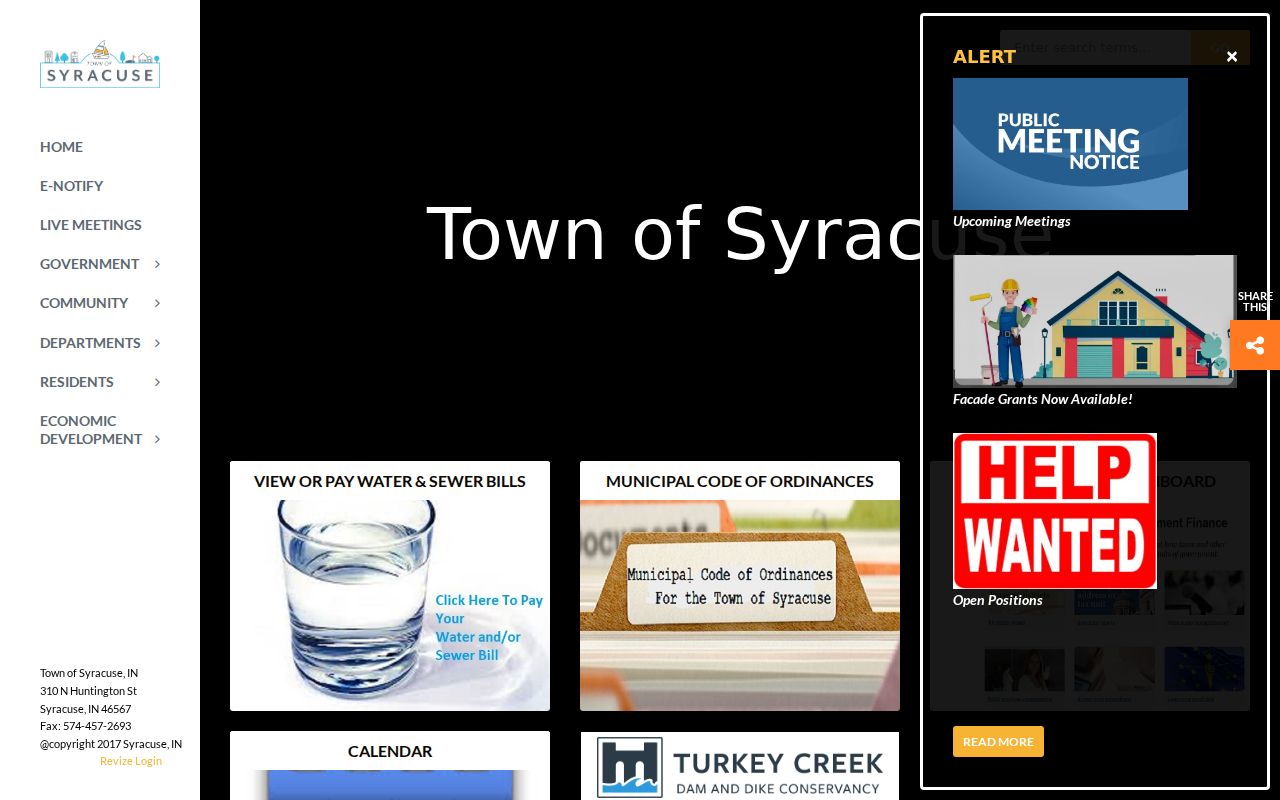
Use that portal for Syracuse departments, town code, and meetings. For a Syracuse court docket, an order, a hearing result, a judgment, or a certified copy, go to MyCase or the Kosciusko County clerk.
The Syracuse Municipal Court
No Syracuse Municipal Court appears in the Indiana Directory of Courts and Clerks or the MyCase court selector. A citation written in Syracuse does not become a town-court docket. That is true even if a town officer or ordinance is involved. The case number and its assignment reveal the real county court. The Kosciusko County Clerk of the Circuit & Superior Courts holds the records for all five trial courts.
Local rules route infractions, ordinance violations, ordinance enforcement, evictions, and small claims. Those go to Superior Court 3. Misdemeanors go to Superior Court 2. Other matters follow more detailed assignments. Those rules hint at likely routing. In any single Syracuse case, the docket header controls. So check its court code rather than guessing from where the event happened.
Syracuse Code Is Not a Court Docket
A town-code page states the rule Syracuse adopted. An agenda lists what officials plan to discuss, and minutes record public business. A Syracuse court docket does something else entirely. It tracks a judicial case. Events, hearings, documents, and disposition fill the record. One civic record may give context for another, but the fields and custodians differ.
| Record | What it answers | Starting point |
|---|---|---|
| Town code | What local rule was adopted | Syracuse portal |
| Agenda or minutes | What town officials scheduled or did | Syracuse meeting records |
| Court docket | What was filed, set, ordered, or resolved | Indiana MyCase |
| Certified document | Official copy of a filed item | County clerk |
A board meeting date is not a hearing date. A code citation is not proof that a court case was filed. Look instead for the county court code and a judicial event stream.
Syracuse Court Dates and Settings
For a Syracuse court date, open the newest MyCase hearing event. Older scheduled events stay in the history after a reset. Expand the event. Check the session date, time, court, description, judicial officer, result, and any cancellation note. CourtCal can serve as a second check, but only for participating courts. Kosciusko Circuit Court and Superior Court 1 appear there. Superior Courts 2, 3, and 4 do not.
| Date | Use the newest non-cancelled hearing session or later order. |
|---|---|
| Time | Read the session time and time zone. |
| Courtroom | Confirm with the court when the public card gives no room. |
| Judge | Read the judicial officer because assignments can change. |
| Setting Type | Initial hearing, pretrial, motion hearing, trial, plea, or sentencing may appear. |
CourtCal covers only the past seven days and the next four weeks. A missing Syracuse setting there does not cancel it. Call the assigned court, especially for 43D02, 43D03, or 43D04.
Syracuse Court Docket Number Codes
A local case number encodes the county, court, filing period, case type, and sequence. 43C01 points to Circuit Court. Prefixes 43D01 through 43D04 point to Superior Courts 1 through 4. A pattern like 43D03-YYMM-F6-###### marks a Superior Court 3 Level 6 felony. MyCase accepts numbers without hyphens and leading zeroes.
Nothing in the number names Syracuse as a venue. That is why a Syracuse-only court search fails. If a transfer changes the code, search the event history and the former number. For a name search, apply the Kosciusko County filter. Add enough detail to weed out unrelated people.
Syracuse Traffic Tickets
A traffic ticket written in Syracuse runs through the county system. In MyCase, search by Citation Number, pick Kosciusko County, and choose Criminal & Citation. Leave the case and cross-reference fields empty. The court, status, events, appearance details, and public financial fields are all worth a look. One caution: the appearance date printed on a payable ticket is a response deadline. It is not a guaranteed hearing date.
Want to fight it? The county wants a signed denial filed by that appearance date. Indiana residents file at the clerk. A defendant living out of state may mail the denial in instead. Superior Court 2 then mails the bench-trial notice. Paying, denying, and seeking a deferral each follow separate paths. So hold off if a deferral is the goal. The county process is laid out in Kosciusko County traffic court records.
Syracuse Dockets Assigned to Superior Three
Local rules send a set of Syracuse case types straight to Superior Court 3. The labels include IF for infractions and OV for ordinance violations. OE stands for ordinance enforcement. EV is for evictions, and SC is for small claims. Title 9 traffic felonies and certain non-support matters land there too. Treat this as an assignment guide only. The case header itself is the authority on where a docket sits.
Not every Syracuse civil dispute goes there. Civil plenary and tort filings rotate between Circuit Court and Superior Court 4, while collection, domestic, mortgage, estate, guardianship, adoption, and miscellaneous cases each carry their own assignment. Run the docket search by number or party name. Then trust the court listed on the case.
Where Syracuse Cases End Up
Syracuse has no municipal court of its own. So a town incident or citation moves straight into the county trial-court system once charges or a filing exist. Appeals from there usually head to the Indiana Court of Appeals. Along the way, MyCase events can list a notice of appeal, completion of the clerk record, and an appellate notice. An opinion comes last.
Docket flow: Syracuse incident or dispute › Kosciusko County Circuit or Superior Court › Indiana Court of Appeals
The five county courts are not appeals stacked on each other. A Syracuse case never works through them in order. Case type fixes the first assignment. A transfer order can move a docket later. For the full county picture, see the Kosciusko County court docket overview.
Syracuse Court Docket Certified Copies
Something you download for a Syracuse case is not the same as a certified copy. Certification comes from the county clerk. The clerk handles records for both the Circuit and Superior Courts. The mail request form wants your contact details, the parties, the case number, the document type, any filing or order date, the number of copies, and whether certification is required.
Payment rules are exact. Send a money order payable to the Kosciusko County Clerk. Include a self-addressed stamped envelope. Figure $1 per page plus $3 per certified document. Check the current total with the clerk before mailing anything. For a wider request, the clerk's online form works too; it just needs a full name and a reasonably specific description.
Syracuse Court Docket and APRA
Two bodies of law shape access here. Indiana's Access to Public Records Act sets a broad framework. Court access rules govern judicial files more directly. Under the state summary, a requester may inspect or copy public records during regular office hours, should describe the material with reasonable particularity, and generally need not state a purpose. The official APRA summary spells out that framework on the state's own page.
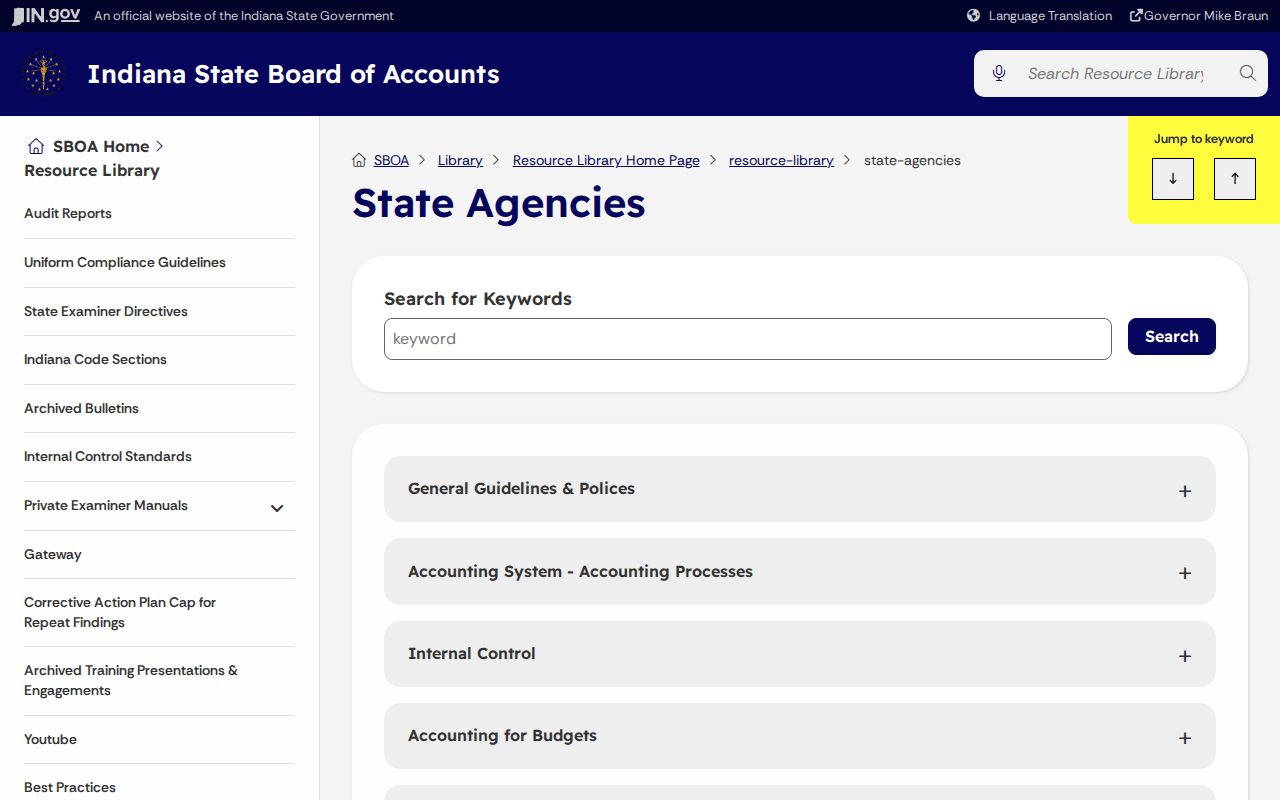
APRA does not unlock court material that rules exclude. If an image is missing, ask the clerk first; it may simply be offline. Truly excluded content takes a verified Rule 9 request.
Public Access to Syracuse Court Records
Rule 4 opens the courthouse doors, but Rule 5 closes parts of the file. Confidential cases, mental-health matters, protected personal data, treatment records, some juvenile and protection-order material, and sealed records can all stay out of a Syracuse docket search. Expungement can change access as well. So an empty result never proves a case does not exist.
Key Rules:
Indiana Access Rule 4 presumes access unless another rule excludes a record.
Indiana Access Rule 5 identifies excluded cases, documents, and data.
Indiana Access Rule 9 sets the extraordinary request process.
Parties can request an access code to open more documents in their own eligible Syracuse case. For everyone else, a document that will not load may just be offline. Ask before assuming it is confidential.